by Heather Grace and Alleah Barnes Haley
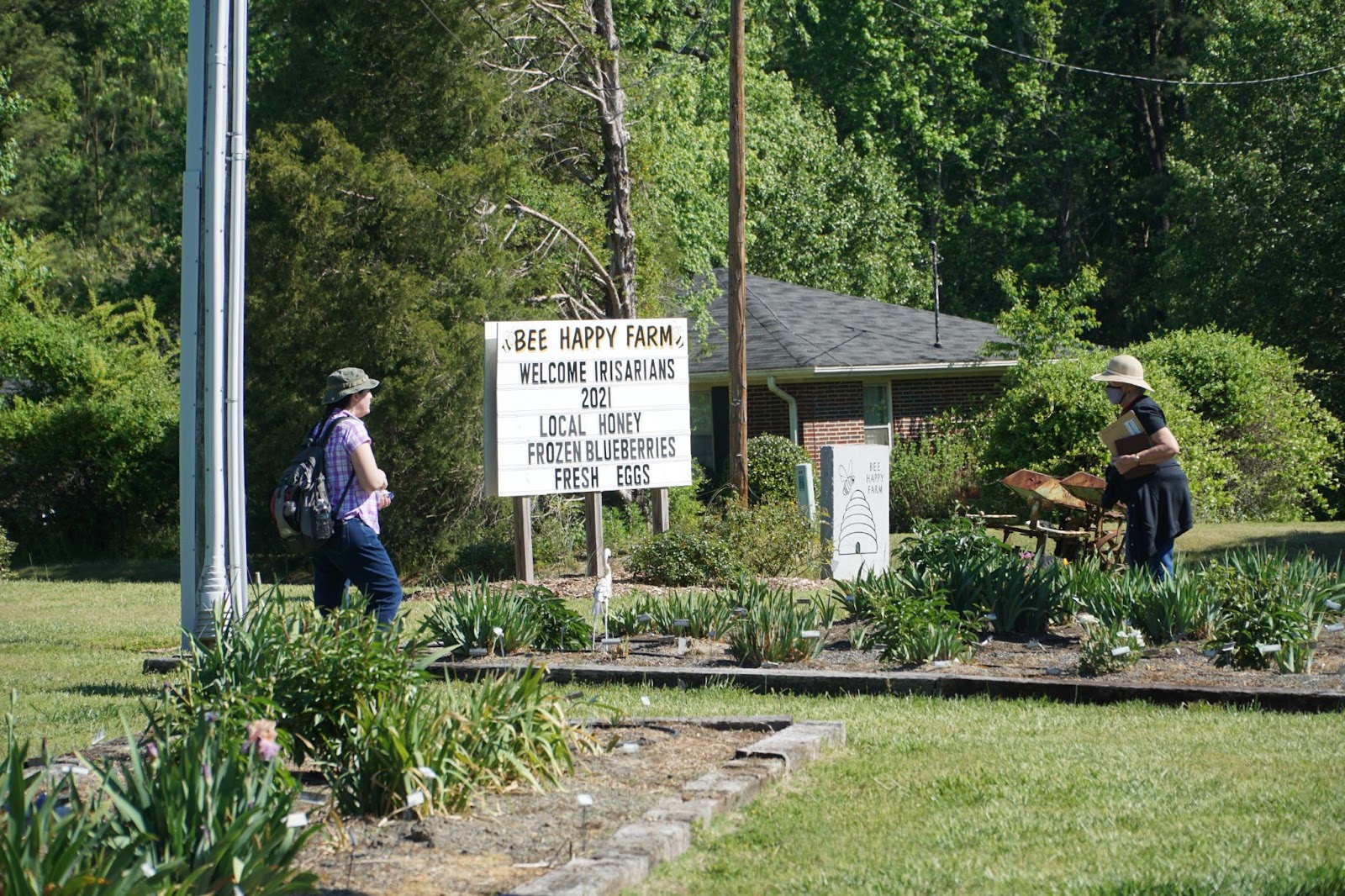
Alleah Haley and daughter Heather discussing irises at the 2021 Region 4 Spring Meeting.
Bee Happy Farm, Creedmoor, North Carolina
Last month Alleah, daughter Heather, and son-in-law Chris met up with about 40 other members of the American Iris Society (AIS) in Raleigh, North Carolina. In 2020 our local iris club, the Eastern North Carolina Iris Society, postponed hosting the AIS Region 4 Spring Meeting due to COVID, so we were eager to make it happen in 2021… if this could be done safely. Orchestrating this regional meeting required a BIG tour bus filled at half capacity for garden tours, BIG meeting rooms for social distancing, and collectively BIG hopes that our iris friends could and would attend.
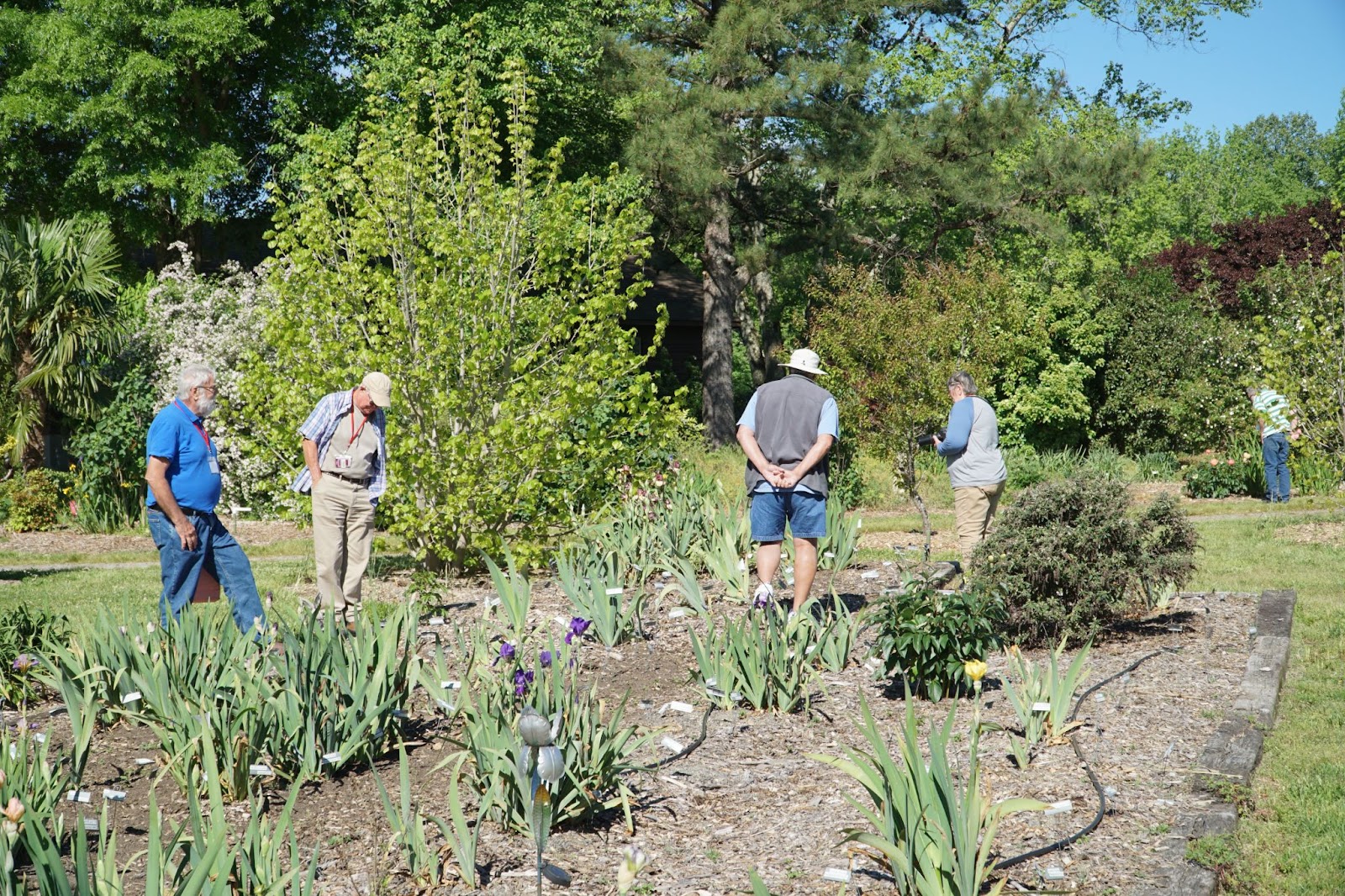
Enjoying irises together AND apart
(foreground left to right) Bob Pries, garden co-owner Dean Richards, immediate past RVP Doug Chyz, and Anita Moran
When the time came, our hearts filled with joy. We met new members who joined AIS during the pandemic when we were unable to meet in person. Familiar faces appeared from our nearest North Carolina neighbor club, the Charlotte Iris Society. From Virginia we were joined by members from the Fredericksburg Area Iris Society, the Shenandoah and Potomac Iris Society, and the Central Virginia Iris Society. Coming from Maryland were members of the Francis Scott Key Iris Society. We even attracted out-of-region celebrities: Doug Chyz of South Carolina and AIS President Jody Nolan and her husband of Ohio.
Attending a regional meeting is always a delightful experience. In addition to connecting with other iris aficionados, the scenery is a feast for the eyes. On Thursday evening the talented Anita Moran presented a program on “How to Photograph Irises.” It was fairly technical and included advice on how to properly focus the camera on iris and avoid extraneous objects while photographing. Alleah is now inspired to take a follow-up at the community college when in-person classes resume. She believes some skills are best learned in the classroom.
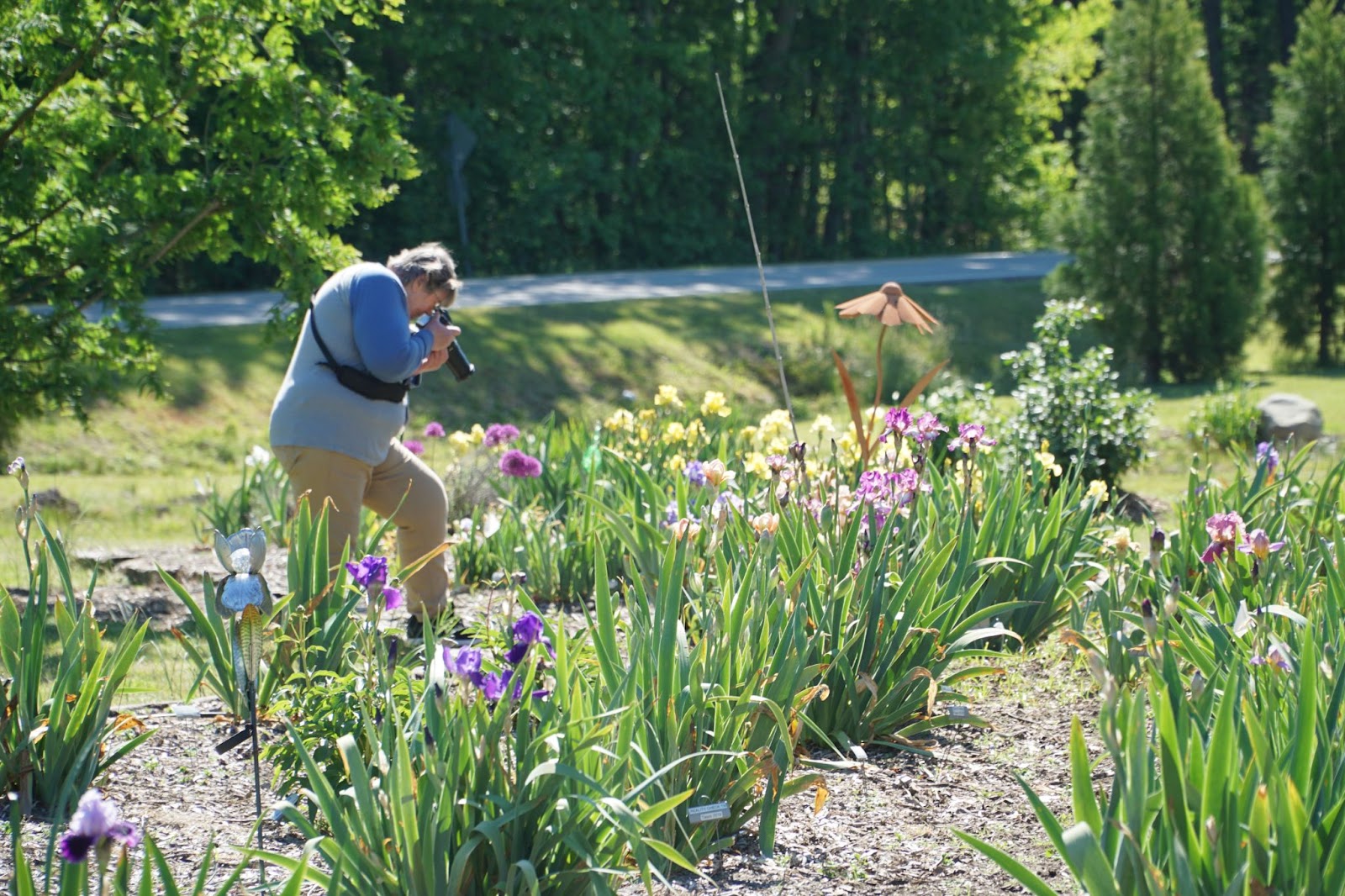
Anita Moran photographing irises
This meeting did not disappoint where learning was concerned. New member Matt Liner brought his first entries ever for an iris show, which joined those delicately transported from distant gardens. The over-100-specimen turnout was impressive considering that most entries were grown in other states. ENCIS members with gardens on tour kept their blooms at home for everyone to enjoy. Apprentice Judge Ingrid Bray received show bench judges’ training under accredited judges Anita Moran, Jody Nolan, and Sue Shackelford. Heather enjoyed punching entry tags to record judges’ awards and place ribbons as a clerk for the iris show. Clerking is a great opportunity to learn more about irises, and she got to spend quality time with expert facilitator Lois Rose who served as Show Chairman.
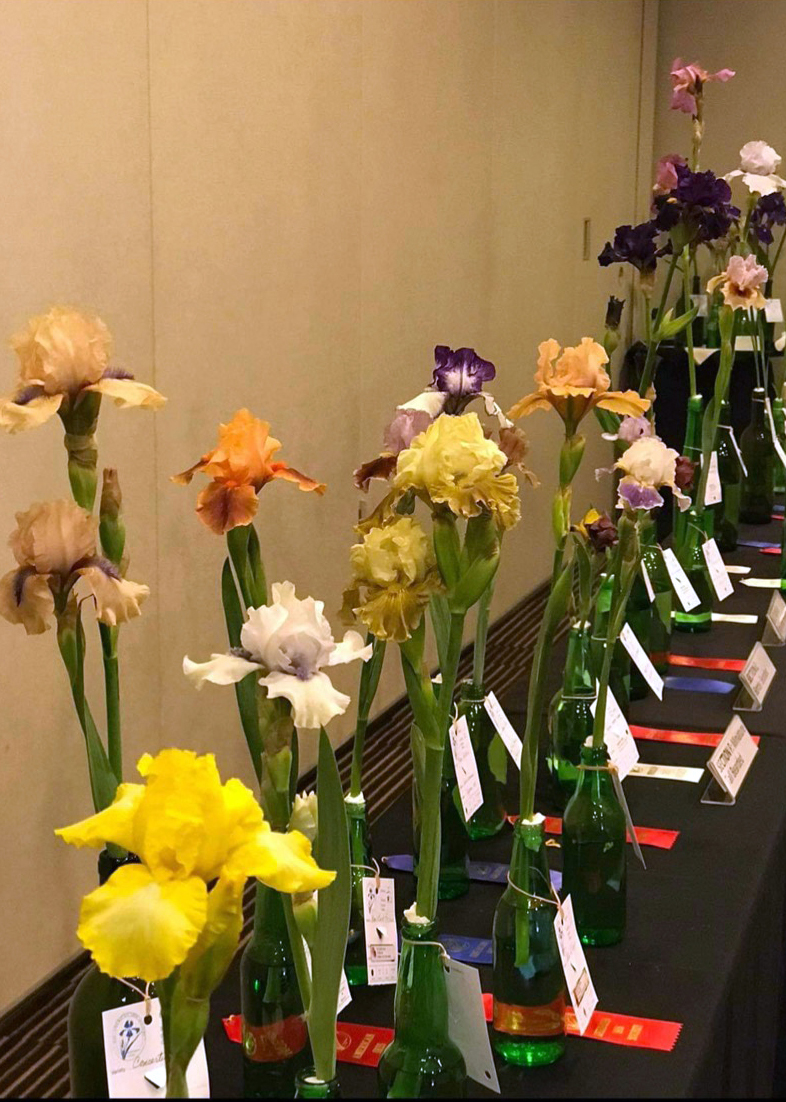
Entering an iris show is a fun way to share blooms from your garden and learn other varieties you might like to grow.
In a banquet room nearby, Alleah moderated a panel discussion of AIS Region 4 judges Ray Jones, Ginny Spoon, and Carol Warner on ethics of judging irises. This topic is one Alleah is passionate about. She has always been particular about following guidelines and doing things right---this applies equally to all aspects of her life. A key message was that judges are the backbone of AIS because they personify its mission and goals. The panel discussion concluded with a 15-question test. No worries. It was “open-book, open notes” which relieved the audience’s anxiety.
After lunch, it was time for more learning! Carol Warner gave training on AIS Awards and Honors. This topic is a requirement for Apprentice Judges to be eligible for accreditation, and many were pleased to add it to their lists of completed training. When the two-hour session concluded, Heather decided it was time for a nap. Alleah and Chris stayed strong and attended the regional plant auction. They bid on many wonderful irises, herbs, shrubs, and succulents donated by members of the region. Chris got outbid by Jody Nolan on a beautiful historic Iris japonica 'Aphrodite’ with variegated foliage. Jody gave a piece of her new specimen to Chris, and it will be a plant with a story our family will treasure for many years to come. Iris friends are really the best type of friends a gardener could ask for. They instinctively share GREAT PLANTS!
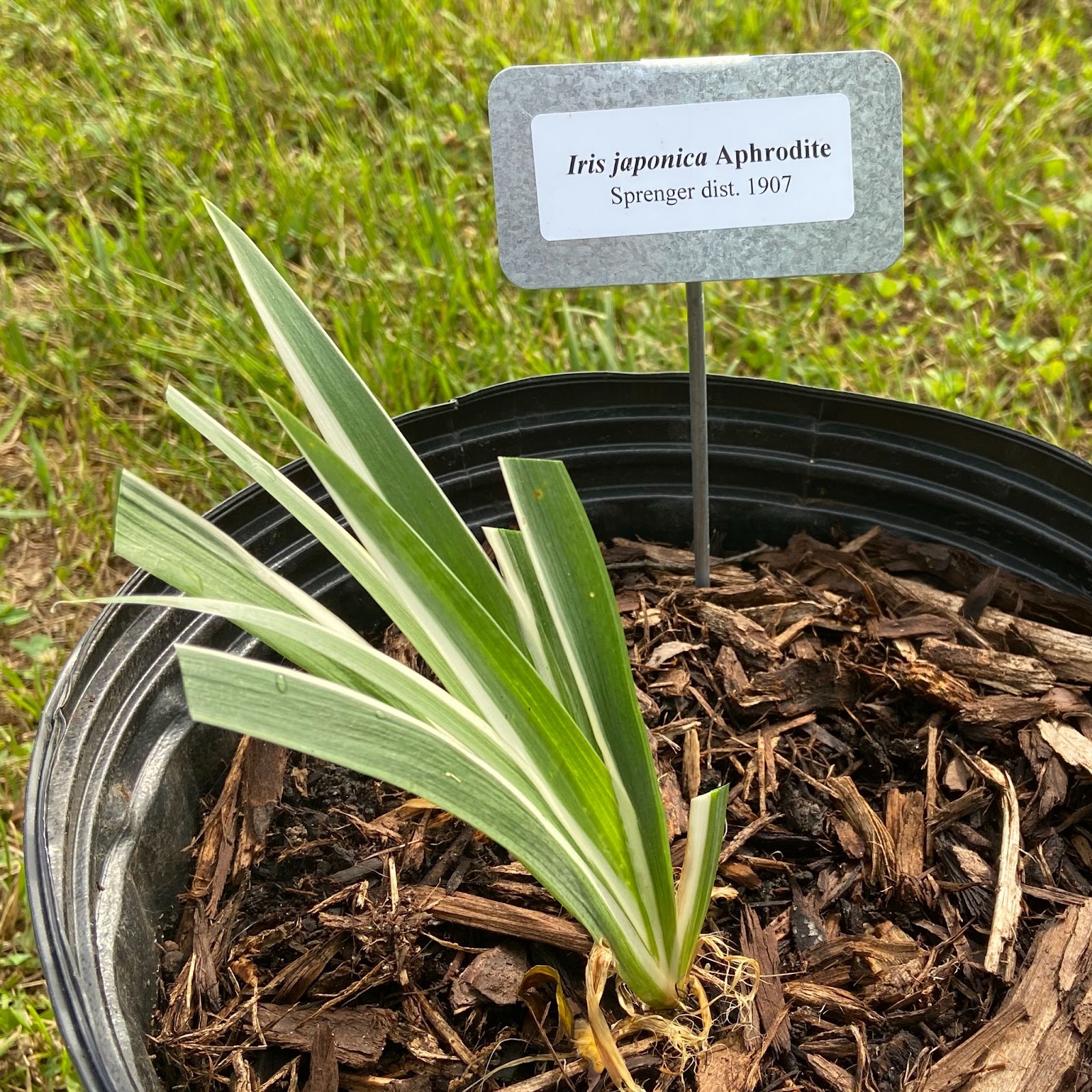
Chris’ rhizome of Iris japonica ‘Aphrodite’ will spend a few years increasing in a pot so he can keep an eye on it.
Saturday brought more opportunities to learn, albeit away from classroom walls. At the first host garden, participants had their pick of four in-garden judges’ training sessions; and the trio of attendees from our family - Alleah, Heather, and Chris - trotted like ducklings behind instructor Anita Moran to a distant bed of medians (small types of irises). This was Chris’ first regional and first opportunity to experience in-garden training. After clear, concise, expert instruction from Anita, Chris set about evaluating an iris. He seemed to enjoy the exercise, and it was fun to hear another family member critique and praise iris features.
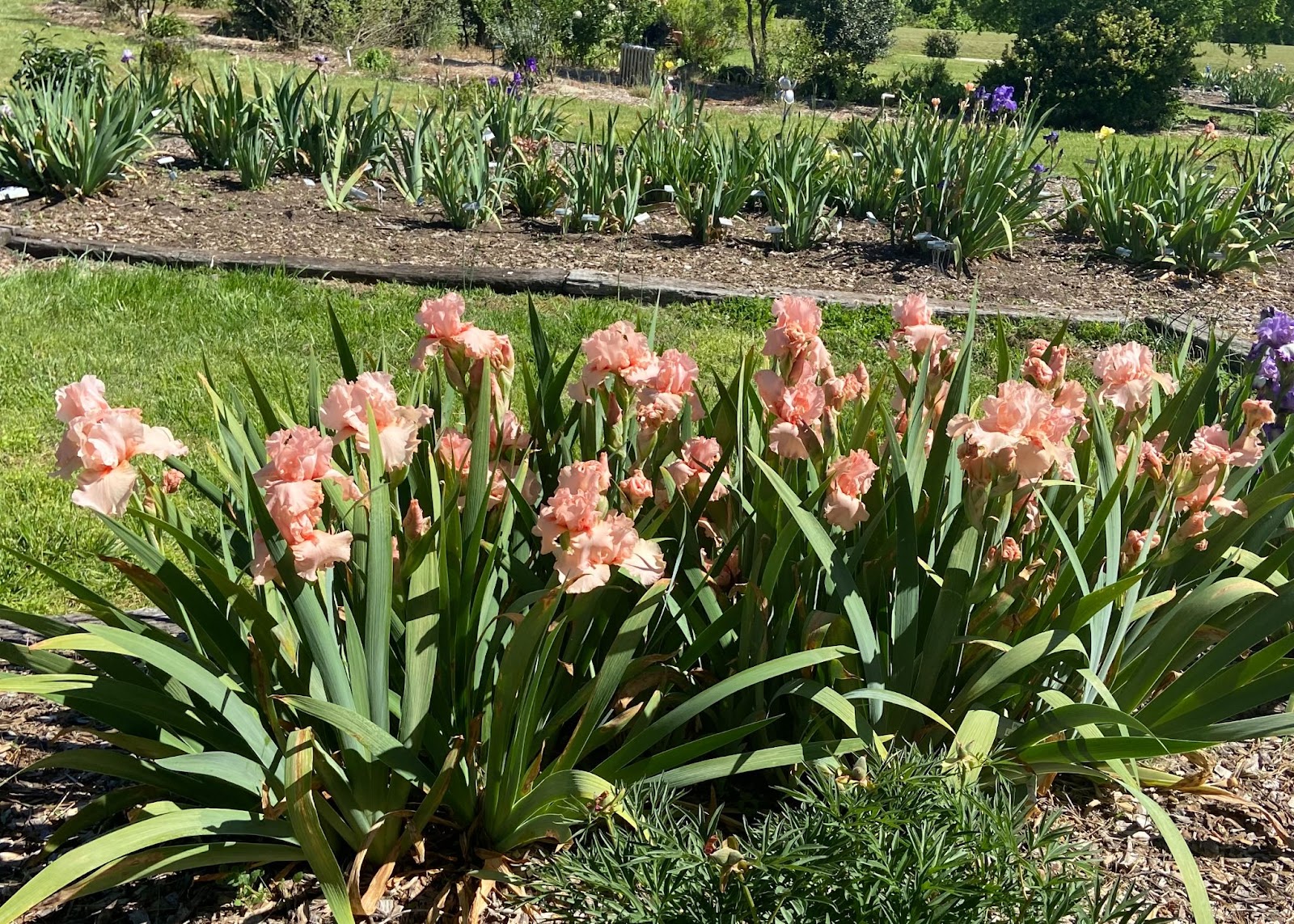
Reblooming iris ‘Peggy Sue’ (Lauer 2006) does well in our gardens, and formed impressive clumps for Diana Dudley and Dean Richards.
It is important to see an iris growing and to know what attributes make irises a prized garden perennial. To the novice, all irises are equally worthy candidates for the home garden. However, for the trained eye, critical merits and faults can be discerned. Some lack pleasing proportions, whereas others have flowers and leaves that match their height. Colors catch the eye from a distance and beards contribute pizzazz. The petals can be pinched (a fault) or have forms that twist (ditto). In the garden, it becomes obvious which irises have good substance and are able to withstand adverse weather conditions without losing their stuff.
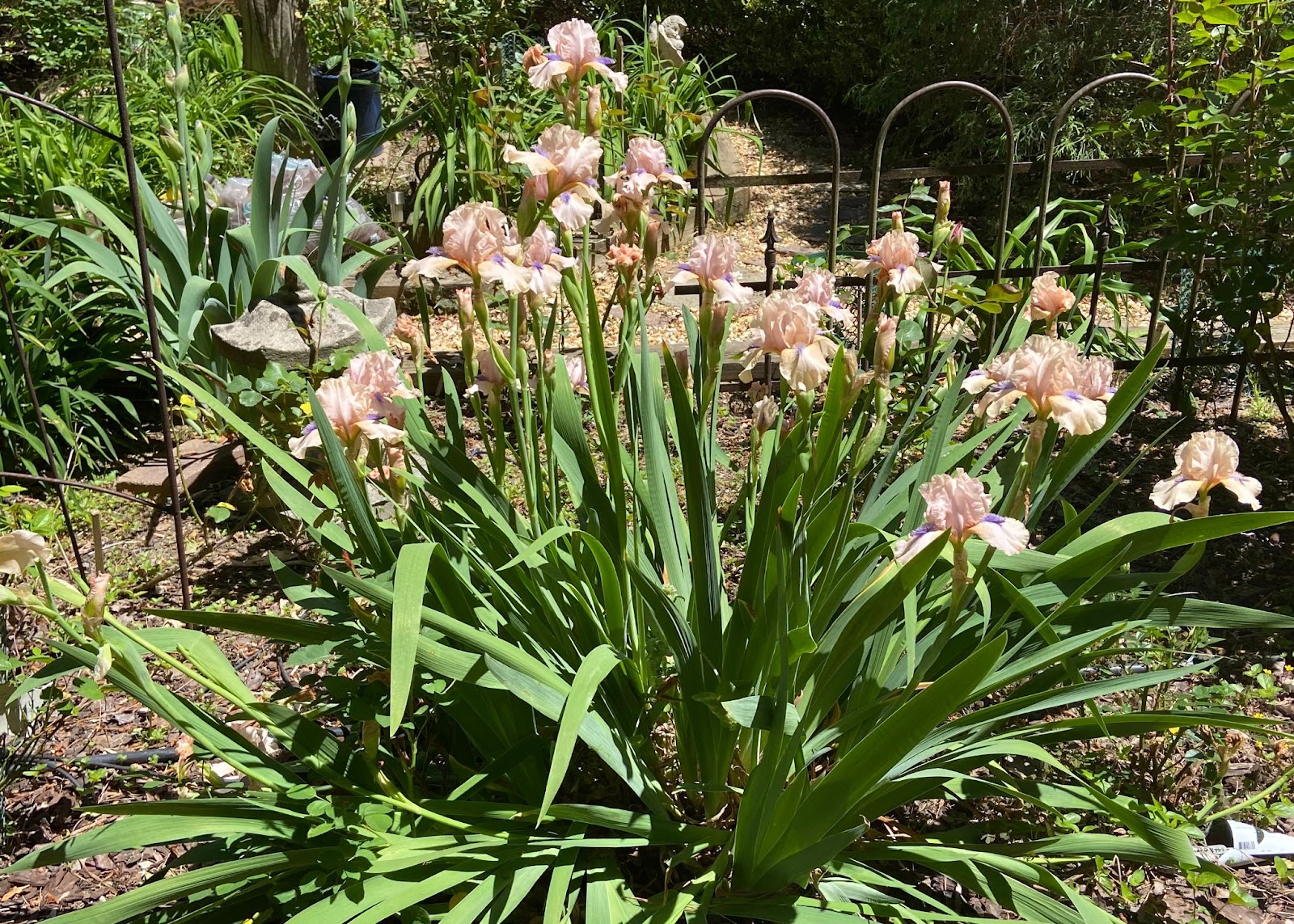
Intermediate Bearded iris ‘Concertina’ (G. Sutton 2000) bloomed wonderfully for our family this year, and was doing the same for Mary and Don Myers.
Clues about floriferousness are present from "bud count" (the number of spent blooms, open blooms, and buds that have not opened yet). Comparing foliage and plants can reveal which cultivars have a good green color, are disease resistant, and will avoid bloom out. It is impossible to gauge these attributes from a photograph. They must be evaluated in a garden, and it helps to understand what you are looking at.
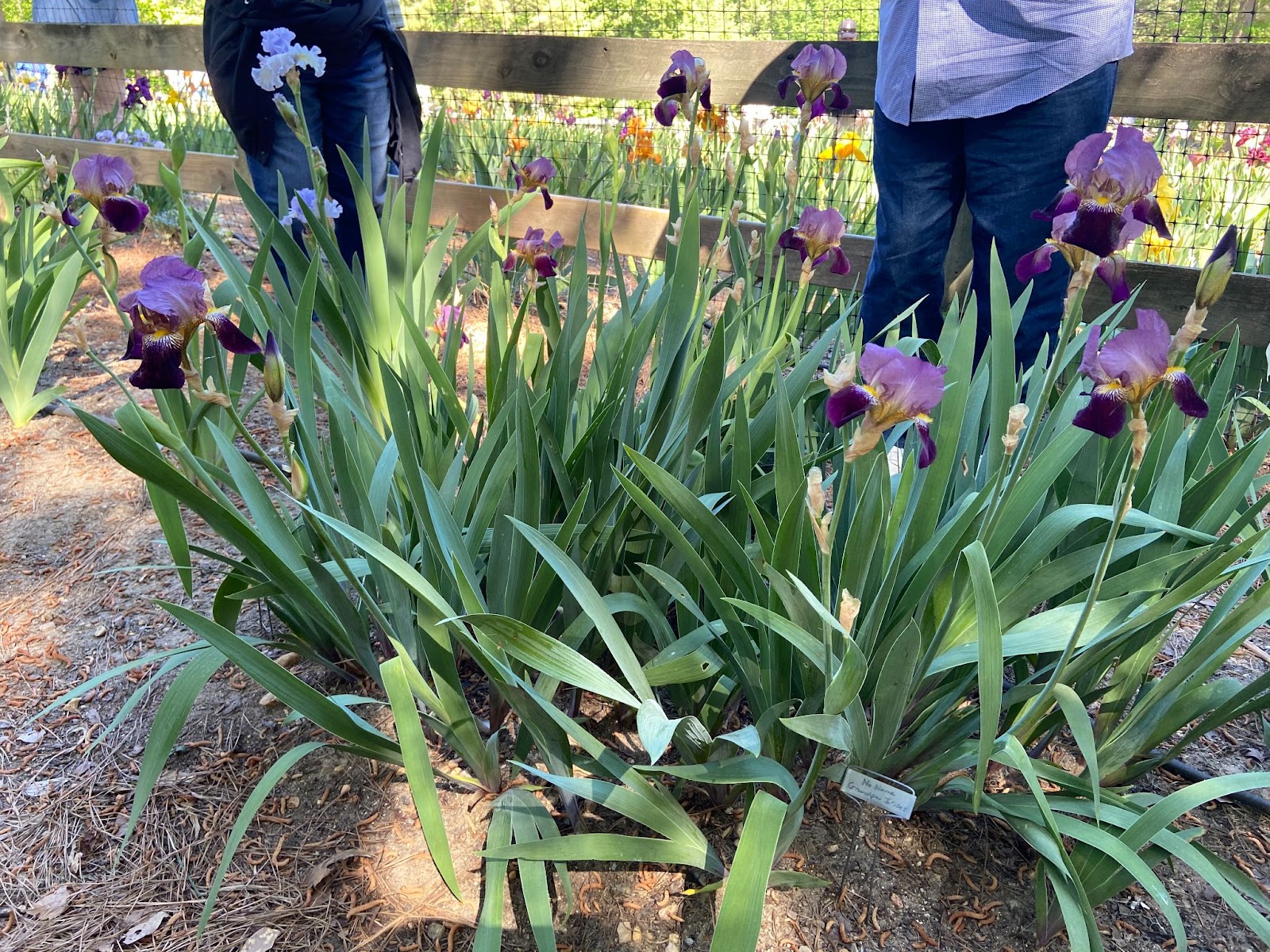
Susan Miller invited attendees to offer suggestions that could help her identify a historic iris she received from her grandfather.
When an iris does well in multiple gardens, it stands out in your memory. Each visit is like seeing an old friend you have dearly missed. It was a joy to tour gardens of ENCIS members Diana Dudley and Dean Richards, Mary and Don Myers, Susan and Glenn Grigg, and Susan and Pete Miller. Each host welcomed the bus with enthusiasm, and shared quirks that make their gardens unique. Visitors took careful notes, and gardens will be described fully in a future issue of our regional newsletter, The Newscast.
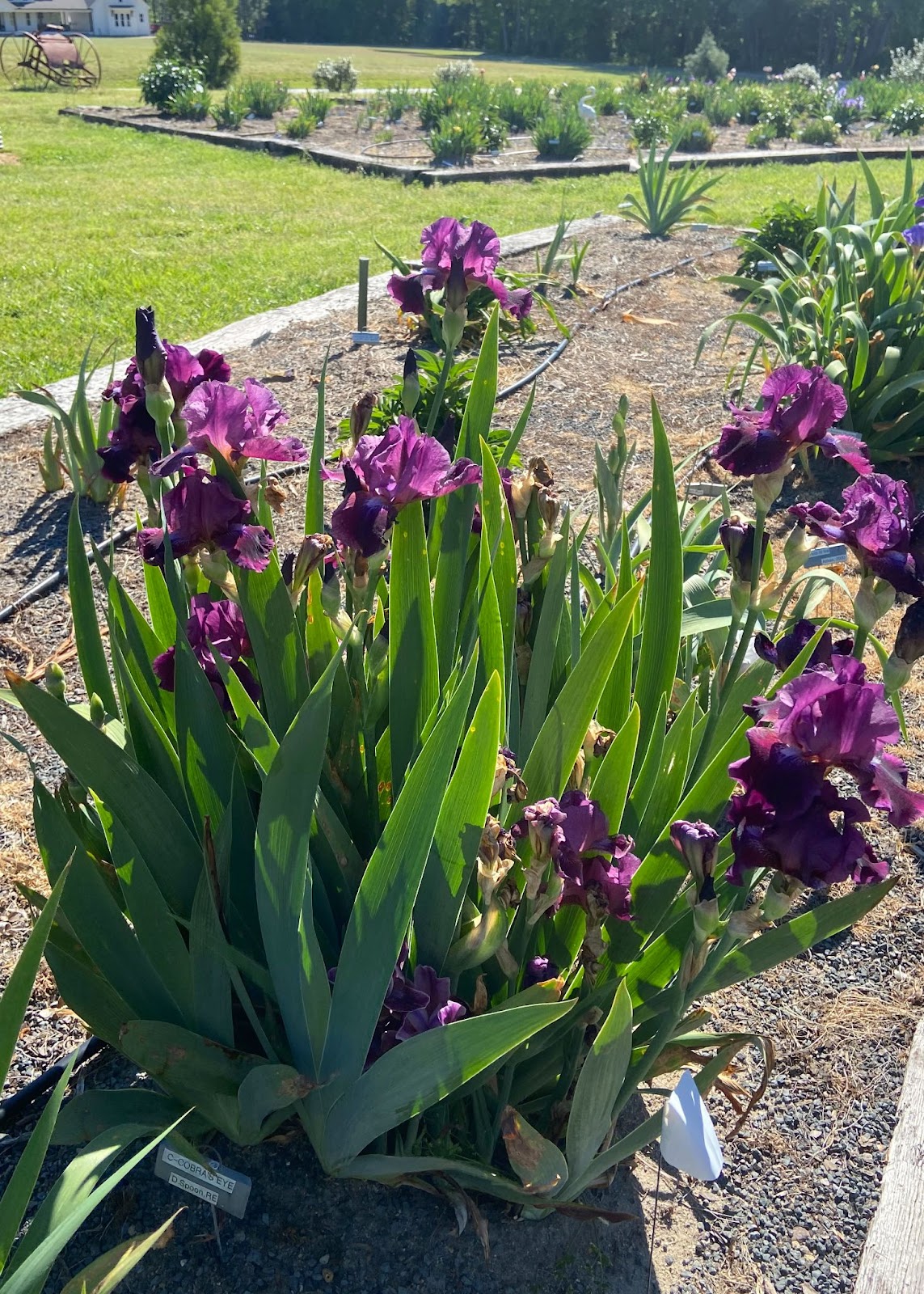
Host gardens identified irises introduced by a Region 4 hybridizer with white flags. ‘Cobra’s Eye’ (D. Spoon 2000) received the most votes on attendee ballots and received the regional D. C. Nearpass Award.
Bus captains Heather and Chris encouraged attendees to designate their favorite blooms on ballots, and regional award winners were announced during a banquet later in the evening. Guest speaker Jody Nolan shared short programs “Why You Should Grow Species Iris” and “How AIS Works.” A key takeaway was that our directors wear many hats, and volunteers can apply their interests and skills to benefit everyone. This rallying cry inspired the technologically-inclined Heather to join AIS Social Media team. She wants to share the love of irises with gardeners who aren’t familiar with AIS yet, but might want to join and learn more.
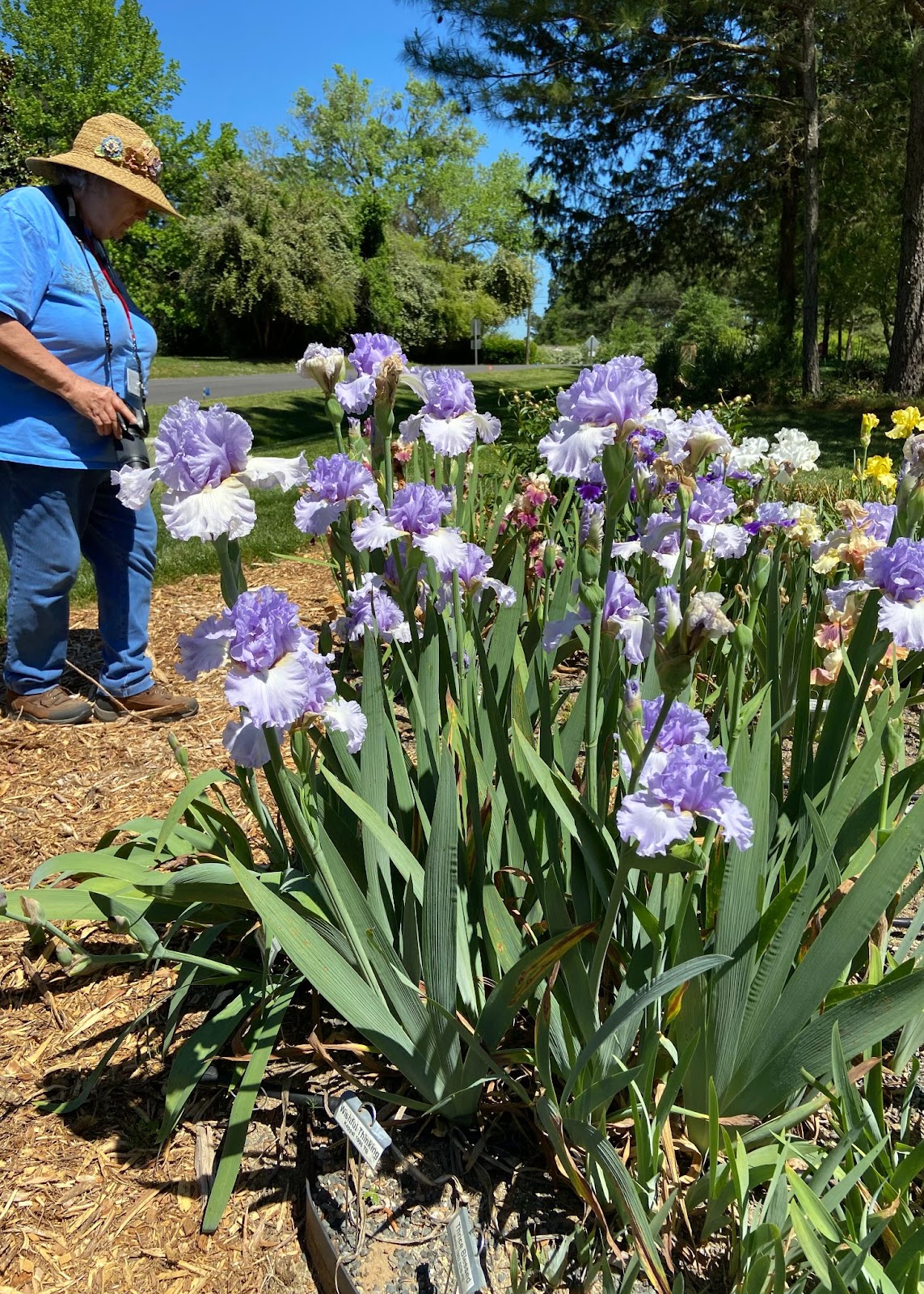
Irises introduced by hybridizers outside Region 4 were also eligible for awards. ‘Wishful Thinking’ (Keppel 1996) received the most votes and won the regional B. Y. Morrison Award.
Alleah is already making plans to gather her descendants at the next national convention. Perhaps we should invite the iris-loving cousins too. We loved getting out of the house for a meetup in Raleigh, and can’t wait for the next opportunity to spend time with our iris family, new members, and old friends.
Photo Credits:
Chris Broberg: Alleah Haley and Heather, Enjoying Irises, Anita Moran;
Nadya Pysmenna: Entering an iris show
Heather Haley: ‘Aphrodite’, ‘Peggy Sue’, ‘Concertina’, Susan Miller historic, ‘Cobra’s Eye’, ‘Wishful Thinking’
For comments:
What do you enjoy doing with members of your region and local iris club?


